Cell-Based Therapy: When Living Cells Become Medicine
Posted 2 months ago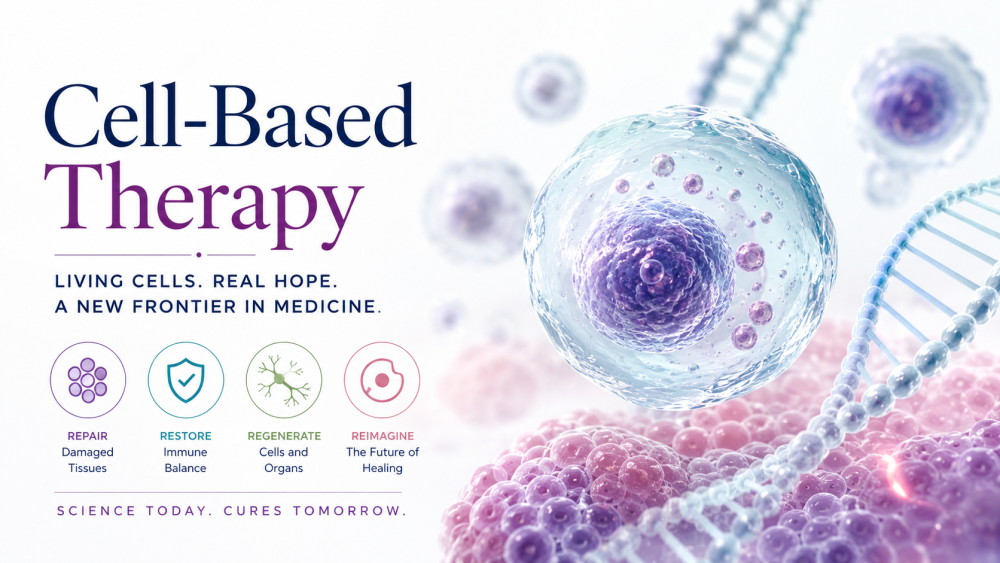
47/2026
Imagine visiting a hospital not to receive a pill or an injection made from chemicals, but to receive millions of living cells, carefully prepared to repair damaged tissues, calm an overactive immune system, or hunt down cancer. What once sounded like science fiction is rapidly becoming one of the most exciting frontiers in modern medicine.
For more than a century, medicine has relied on three main weapons: chemically derived drugs, vaccines, and biological medicines such as antibodies and hormones. Based on recent successes, scientists have added a remarkable new tool to that list: cell-based therapy, sometimes called living medicine. Rather than using molecules to influence the body, these therapies use living cells that can sense their environment, respond to disease, and sometimes even multiply after entering the patient.
What Is Cell-Based Therapy?
Every human body contains roughly 37 trillion cells, each performing a specialized job. Red blood cells transport oxygen. Immune cells defend against infections. Skin cells protect the body from the outside world. Nerve cells transmit electrical signals that allow us to think, feel, and move.
Cell-based therapy is a medical treatment in which living cells are transferred into a patient to prevent, treat, or even cure disease. These cells may replace damaged tissue, repair injured organs, regulate inflammation, or destroy harmful cells, such as cancer cells.
Think of traditional medicine as repairing a machine with tools. Cell therapy is more like sending in skilled workers who can inspect the damage, make repairs, communicate with one another, and keep working long after they arrive.
That ability makes cells fundamentally different from conventional medicines.
Why Are Scientists So Excited?
A pill follows instructions programmed into its chemistry. Once the body breaks it down, its job is over.
Living cells, when used as medicine, can:
- Detect changes in their surroundings.
- Release healing molecules when needed.
- Communicate with neighboring cells.
- Multiply under certain conditions.
- Adapt their behavior over time.
In many ways, cells behave like tiny biological computers, constantly gathering information and making decisions. Researchers increasingly view them not merely as building blocks of the body but as intelligent biological systems capable of becoming highly sophisticated medicines.
Different Types of Cell-Based Therapies
1. Stem Cell Therapy
Stem cells are often called the body's "master cells." Unlike most cells, they can develop into many different cell types.
Doctors already use blood-forming stem cells in bone marrow transplantation to treat leukemia, lymphoma, and other blood disorders. Researchers are now exploring whether stem cells can repair damaged hearts, regenerate cartilage, restore nerve tissue after spinal cord injuries, and help treat diabetes.
One particularly promising type is the mesenchymal stem cell (MSC), which not only helps repair tissues but also releases molecules that reduce inflammation and promote healing. More than a thousand clinical trials have investigated their potential across a wide range of diseases.
2. CAR-T Cell Therapy
Among the greatest breakthroughs in cancer treatment is CAR-T cell therapy.
Normally, immune cells called T cells patrol the body, searching for infected or abnormal cells. Unfortunately, cancer often evades them. Scientists solve this problem by collecting a patient's own T cells, genetically modifying them in the laboratory to recognize cancer cells, multiplying them to millions of copies, and then returning them to the patient's bloodstream. The result is an army of specially trained immune cells capable of identifying and destroying cancer cells with remarkable precision.
CAR-T therapies have transformed treatment for several blood cancers, providing many patients with long-term remission after other therapies failed. Researchers are now working to make similar treatments effective against solid tumors, including pancreatic, ovarian, and kidney cancers.
3. Immune Cell Therapies Beyond Cancer
Scientists are also adapting immune cells to fight diseases beyond cancer.
Early clinical studies are investigating engineered immune cells to suppress HIV infection, while other researchers are exploring treatments for autoimmune disorders in which the immune system mistakenly attacks the body's own tissues. Although these approaches remain experimental, they illustrate how versatile living cells may become in future medicine.
4. Skin and Tissue Engineering
Severe burns often destroy the skin's natural ability to heal.
Doctors can now grow sheets of healthy skin cells in specialized laboratories and transplant them onto patients with severe burn injuries. Similar approaches are being developed to regenerate cartilage, corneas, and other damaged tissues.
How Are These Cells Made?
Creating living medicines is far more complex than manufacturing tablets.
Scientists begin by collecting cells from the patient or a healthy donor. The cells are then grown under carefully controlled laboratory conditions, where temperature, nutrients, oxygen, and sterility are tightly monitored.
Depending on the therapy, researchers may:
- Expand the cells into millions or billions.
- Genetically modify them.
- Test them for safety and quality.
- Freeze them until needed.
Only after passing rigorous quality checks are they delivered to hospitals for patient care.
This manufacturing process remains one of the biggest challenges to making cell therapies widely available. Experts increasingly believe that future progress depends not only on biological discoveries but also on improvements in large-scale production, transportation, and affordability.
Examples That Are Already Changing Lives
Several forms of cell therapy are no longer experimental.
Bone marrow transplantation has saved hundreds of thousands of patients with leukemia and inherited blood disorders over the past several decades.
CAR-T therapies have produced dramatic recoveries in patients with aggressive blood cancers that had stopped responding to conventional treatment.
Researchers are also conducting advanced clinical trials for Parkinson's disease, in which laboratory-grown dopamine-producing cells are implanted into the brain in hopes of restoring lost function. Although these studies are still underway, they mark an exciting new direction for regenerative medicine.
Cells Are Teaching Us How to Build Better Medicines
One of the most exciting developments is that scientists are no longer studying cells merely as treatment tools; they are learning from them instead.
Using advanced microscopy, artificial intelligence, and single-cell analysis, researchers can now observe how individual cells respond to thousands of potential drugs. Rather than simply asking whether a drug kills bacteria or shrinks a tumor, scientists examine how it alters the behavior, shape, communication, and health of living cells.
These detailed cellular "fingerprints" help researchers identify promising drugs earlier, predict side effects more accurately, and design treatments that work more effectively in real human biology rather than only in laboratory models.
Challenges That Still Remain
Despite enormous progress, cell-based therapy is not a miracle cure.
Scientists continue to face important challenges:
- Producing enough cells for millions of patients.
- Reducing treatment costs.
- Preventing immune rejection.
- Ensuring long-term safety.
- Making therapies available in low- and middle-income countries.
Researchers are also working to develop off-the-shelf cell therapies universal cells that could be stored in hospitals and used immediately, without creating a custom treatment for each patient. Such advances could dramatically expand access worldwide.
The Future of Living Medicine
Medicine has evolved from herbs to chemicals, from biological drugs to precision medicine. Cell-based therapy marks the next remarkable chapter in that journey.
In the coming decades, doctors may routinely prescribe personalized immune cells to eliminate cancer, stem cells to repair damaged organs, engineered neurons to treat neurological diseases, and specialized cells that continuously monitor the body for signs of illness before symptoms appear.
The smallest units of life may ultimately become the greatest healers.
Disclaimer:
The contents provided on www.biomedglobal.org are intended for general informational and educational purposes only. This website's information, articles, and resources are based on data and findings from scientific publications, publicly available research, and reputable sources.
While every effort is made to ensure accuracy and reliability, Biomed Global does not guarantee, endorse, or assume responsibility for the completeness, timeliness, or validity of the information.
The material on this website should not be considered a substitute for professional advice, diagnosis, or treatment. Users are strongly encouraged to consult qualified healthcare professionals, researchers, or subject-matter experts before making decisions based on the information presented here.
Under no circumstances shall Biomed Global, its affiliates, contributors, or authors be held liable for any direct, indirect, incidental, or consequential damages arising from the use of, or reliance on, the content of this website.
By accessing and using www.biomedglobal.org, you fully acknowledge and agree to this disclaimer.