Early Signs of Parkinson’s Disease: Symptoms You Should Never Ignore
Posted 7 months ago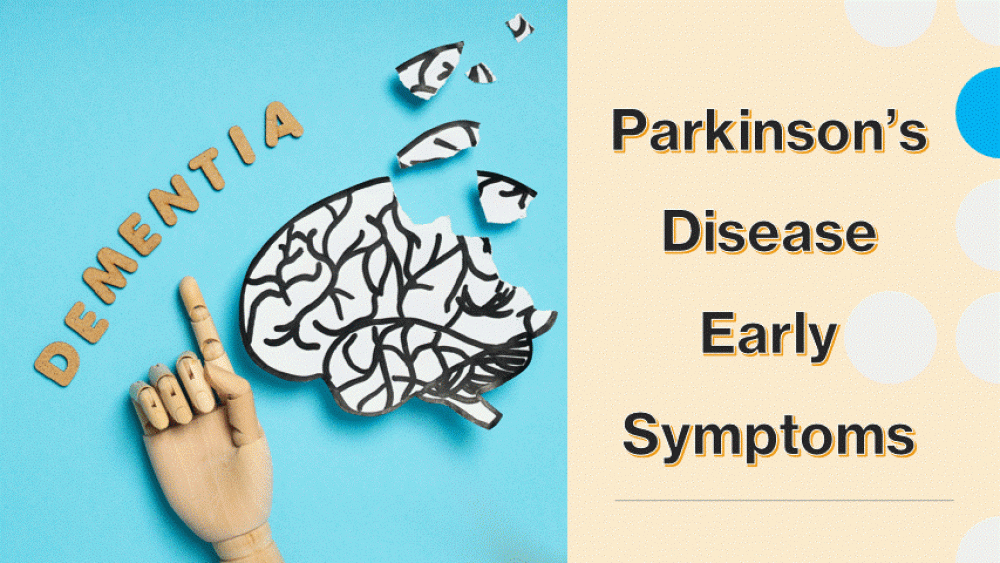
09/2026
Before You Read This Article
🌿 A Message of Reassurance
Parkinson’s is a progressive disease, but it can be managed effectively, especially when caught early. Many people remain active and productive for decades with proper care.
Awareness isn't about fear, it's about preparedness and empowerment.
Most people think of Parkinson’s disease as someone with shaking hands. While tremors are a common sign, experts emphasize that it’s just the tip of the iceberg. Parkinson’s is a progressive brain and nervous system disorder where specific brain cells that produce dopamine, a chemical essential for smooth movement, gradually die off over time.
Many people don’t realize that recognizing early signs, such as loss of smell or sleep disturbances, can empower you or your loved ones to seek help sooner, potentially leading to better outcomes.
Here are four warning signs experts say you should never ignore:
🔹 1. A Change in Sense of Smell
One of the earliest surprising signs is a sudden or ongoing loss of smell (anosmia). Many people think this is just allergies, a cold, or aging. But for those who develop Parkinson’s, this change often happens years before movement issues show up.
If familiar smells suddenly become faint or unrecognizable without any clear reason, it’s worth paying attention.
🔹 2. Trouble Sleeping or Acting Out Dreams
Sleep issues, particularly a condition called REM Sleep Behavior Disorder, often appear long before motor symptoms. In this disorder, the normal paralysis that keeps you still during dreaming doesn’t function, and individuals may kick, punch, talk, or move vigorously while asleep.
This type of sleep behavior differs from typical restlessness and is closely linked to early brain changes associated with Parkinson’s.
🔹 3. Constipation and Digestive Slowing
Unexplained constipation that persists despite lifestyle or diet changes can also be an early sign. Parkinson’s affects the nerves in the digestive system long before it impacts movement. Many patients report a long history of bowel issues before any tremor ever begins.
Since constipation can result from many factors, like diet or stress, persistent unexplained constipation combined with other signs should raise concern. If these symptoms occur together, it's important to consult a healthcare professional to rule out Parkinson's disease or other conditions.
🔹 4. Subtle Changes in Movement and Speech
Before obvious shaking begins, subtle motor changes often appear.
- Micrographia: Handwriting that becomes more cramped or smaller than before.
- Soft or breathy voice: A quiet, unclear, or less expressive voice that others notice.
- Slower movement and stiffness: Everyday actions like buttoning clothes, walking, or rising from a chair take a little more effort or time than before.
These changes often develop slowly enough that people don’t associate them with a neurological cause, but collectively, they can indicate Parkinson’s long before the classic tremor appears.
Why Early Recognition Matters
Parkinson’s doesn’t develop overnight. The brain slowly declines, potentially starting as early as 20 years before motor symptoms become noticeable. In that early stage, many changes happen quietly in sleep, smell, digestion, and mood.
Early awareness of signs such as constipation or sleep issues can help you take steps to support your health and maintain your quality of life.
Take Home Message
Parkinson’s is much more than just shaking hands. Recognizing signs such as loss of smell, unusual sleep behaviors, chronic constipation, subtle speech or writing changes, or slowed movement can be the initial clues that something deeper is happening in the nervous system. Knowing what to observe and acting on it truly makes a difference.
If you notice any of these signs without a clear cause, it’s advisable to consult a doctor or neurologist promptly. Early evaluation can lead to timely intervention, which may slow disease progression and improve quality of life.
IMPORTANT CHECK LIST
✅ Early Warning Self-Check
1️⃣ Has the Sense of Smell Changed?
- Do familiar scents (perfume, spices, soap, food) seem weaker?
- Did this happen gradually, without a cold or allergy?
🔎 Persistent loss of smell can appear years before movement symptoms.
2️⃣ Is Sleep Becoming Unusual?
- Does the person kick, punch, shout, or “act out” dreams?
- Has a bed partner noticed sudden physical movements during sleep?
🛌 Acting out dreams (REM Sleep Behavior Disorder) is strongly linked to future Parkinson’s.
3️⃣ Is There Ongoing Constipation?
- Has digestion slowed noticeably?
- Is constipation persistent despite diet and hydration?
🧬 Parkinson’s affects the nervous system of the gut early on — sometimes decades before tremor.
4️⃣ Are Movements Subtly Slower?
- Walking pace reduced?
- Arms not swinging naturally?
- Difficulty buttoning clothes?
- Getting up from a chair takes extra effort?
🚶 Slowness (bradykinesia) is often more telling than tremor.
5️⃣ Has Handwriting Become Smaller?
- Are letters cramped or shrinking over time?
✍️ This change is called micrographia and is a classic early motor clue.
6️⃣ Is the Voice Softer or Less Expressive?
- Speaking more quietly?
- Others ask you to repeat yourself?
🎤 Subtle voice change often goes unnoticed by the patient.
⚖️ Important Reminder
Having one of these signs does not automatically mean Parkinson’s disease. Many conditions can cause similar symptoms.
However, if several signs appear together or gradually worsen, a consultation with a neurologist is wise.
🏥 When to See a doctor
Seek medical evaluation if:
- Symptoms persist beyond a few months
- Sleep behaviors become unsafe
- Slowness affects daily functioning
- Family members observe noticeable personality or movement changes
Early assessment allows:
- Earlier treatment
- Lifestyle adjustments
- Physical therapy and exercise planning
- Better long-term quality of life
Additional Reading:
2. Evolving Landscape of Parkinson’s Disease Research: Challenges and Perspectives | ACS Omega
Disclaimer:
The contents provided on www.biomedglobal.org are intended for general informational and educational purposes only. This website's information, articles, and resources are based on data and findings from scientific publications, publicly available research, and reputable sources.
While every effort is made to ensure accuracy and reliability, Biomed Global does not guarantee, endorse, or assume responsibility for the completeness, timeliness, or validity of the information.
The material on this website should not be considered a substitute for professional advice, diagnosis, or treatment. Users are strongly encouraged to consult qualified healthcare professionals, researchers, or subject-matter experts before making decisions based on the information presented here.
Under no circumstances shall Biomed Global, its affiliates, contributors, or authors be held liable for any direct, indirect, incidental, or consequential damages arising from the use of, or reliance on, the content of this website.
By accessing and using www.biomedglobal.org, you fully acknowledge and agree to this disclaimer.