Understanding FDA and EMA Medicine Approval
Posted 1 month ago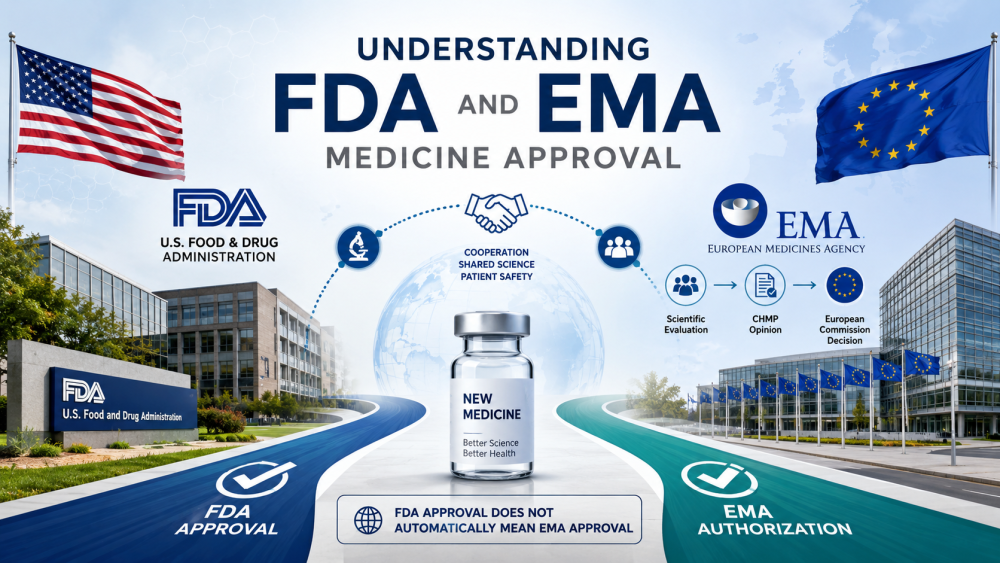
53/2026
The U.S. Food and Drug Administration (FDA) and the European Medicines Agency (EMA) are two of the world’s most influential medicines regulators, yet they operate under fundamentally different regulatory systems. The FDA is a centralized U.S. federal agency with direct authority to regulate and approve medicines in the United States. In contrast, the EMA is a European network that coordinates scientific evaluations with medicines regulators and experts from EU Member States.
For centrally authorized medicines, the EMA conducts the scientific assessment and issues a recommendation, while the European Commission makes the legally binding authorization decision. Despite these differences, the two agencies work closely together. They exchange scientific and regulatory information, collaborate on drug-safety monitoring and on clinical-trial and manufacturing inspections, and have mechanisms for sharing confidential information. They also provide parallel scientific advice, allowing developers to discuss medicine-development plans with experts from both jurisdictions, and a U.S. - EU mutual-recognition arrangement allows regulators to rely, within its scope, on each other's inspections of medicine manufacturing facilities.
Importantly, the FDA and EMA do not approve medicines jointly: each agency evaluates products independently under its own laws and regulatory standards. Nevertheless, their sustained dialogue and information sharing can reduce duplication, improve regulatory efficiency, and promote greater consistency in decisions. An analysis by the agencies found that they reached aligned marketing authorizations for more than 90% of the new medicines examined in one study.
FDA Approval Does Not Automatically Mean EMA Approval
An important distinction is that FDA approval does not automatically authorize medicine for use in the European Union. The United States and the EU operate under separate legal and regulatory frameworks, so a pharmaceutical company seeking to market an FDA-approved medicine in Europe generally must submit a separate marketing authorization application under the EU regulatory system. For medicines eligible for the centralized procedure, the EMA's Committee for Medicinal Products for Human Use (CHMP) scientifically evaluates the application and issues an opinion; the European Commission then makes the legally binding decision on whether to grant EU marketing authorization. FDA approval can provide important scientific and clinical evidence for the European application, and the two regulators cooperate extensively. They may exchange information, but FDA approval itself is neither an EMA approval nor a substitute for the EU authorization process. Conversely, an EMA/European Commission authorization does not automatically permit marketing a medicine in the United States.