EBOLA – WHO Declares Public Health Emergency of International Concern
Posted 5 months ago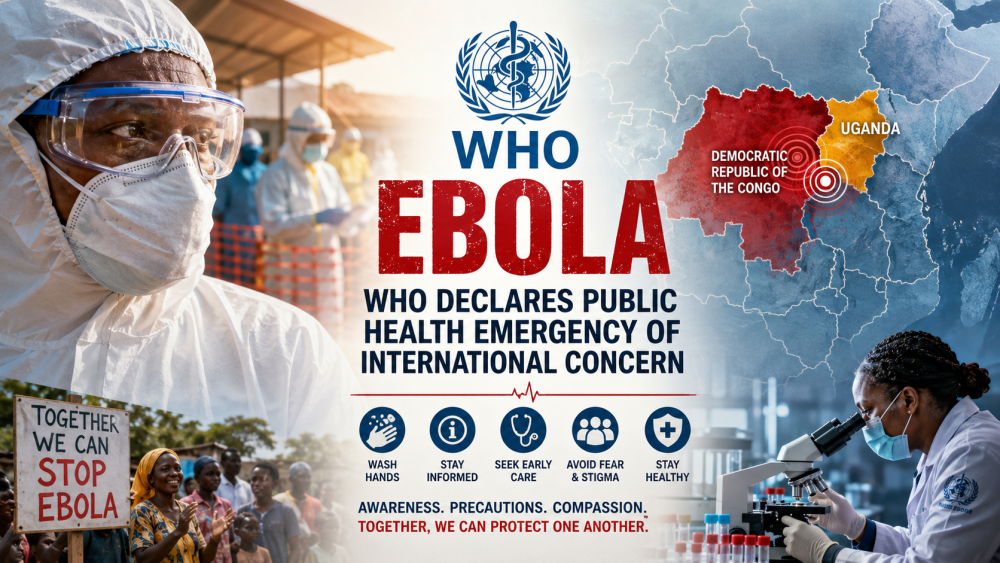
28/2026
The recent Ebola outbreak in parts of Central Africa has understandably raised concern around the world since the World Health Organization (WHO) declared it a global public health emergency. Yet health experts emphasize that awareness, early precautions, and reliable information remain the most effective tools for protecting individuals and communities.
For people who may be vulnerable to infectious diseases due to frequent travel, healthcare exposure, weakened immunity, or work in high-risk environments, this moment is not a reason to panic. Rather, it is an opportunity to strengthen healthy habits, stay informed, and support evidence-based public health measures.
The current outbreak involves the Bundibugyo strain of the Ebola virus, a rare variant distinct from those in some previous Ebola outbreaks. Scientists are urgently working to improve surveillance, diagnostics, and supportive care, while international health agencies coordinate containment efforts.
What People Should Know About Ebola
Ebola does not spread as easily as common respiratory infections such as influenza or COVID-19. The virus is primarily transmitted through direct contact with an infected person's bodily fluids, including blood, vomit, and contaminated materials such as clothing and bedding.
This means that ordinary daily interactions generally do not put most people at high risk. Public health experts continue to stress that informed precautions are far more effective than fear.
Common symptoms may include:
• Fever
• Severe fatigue
• Muscle pain
• Vomiting or diarrhea
• Headache
• In some cases, internal or external bleeding
Symptoms usually appear several days after exposure, which is why early monitoring and medical consultation are important.
Guidance for Individuals in Higher-Risk Situations
For travelers, healthcare workers, and residents, taking practical steps can empower you to reduce risk and feel more in control.
Personal Hygiene
Frequent handwashing with soap or an alcohol-based sanitizer remains one of the simplest and most effective preventive measures. Avoid direct contact with bodily fluids or contaminated materials.
Stay Informed Through Trusted Sources
Rely on guidance from organizations such as the World Health Organization and national public health agencies rather than social media rumors or misinformation.
Seeking Early Medical Attention
If symptoms develop after travel to affected regions or after contact with a suspected case, prompt medical evaluation is essential. Early supportive treatment can improve outcomes and help prevent further transmission, making timely action critical.
Avoid Panic and Stigma
Communities affected by outbreaks need support, empathy, and accurate information — not fear or discrimination. History repeatedly shows that cooperation and trust improve outbreak control.
Healthy Diet and General Health
Adequate sleep, balanced nutrition, hydration, and management of chronic illnesses help strengthen overall resilience during infectious disease outbreaks.
Reason for Hope
While the outbreak is serious, the global response today is far stronger than it was during earlier Ebola crises. Scientists now have better outbreak-detection systems, improved infection-control protocols, and faster mechanisms for international coordination. African healthcare workers, researchers, and epidemiologists are playing a leading role in surveillance and containment efforts.
Importantly, Ebola outbreaks have been successfully contained before. Public health systems around the world are now more experienced in contact tracing, laboratory testing, and emergency response than at any other time in history.
The WHO has also clarified that, despite the emergency declaration, the outbreak does not currently meet the criteria for a global pandemic. International agencies are focusing on rapid containment and cross-border coordination to limit the spread.
A Shared Responsibility
Outbreaks highlight that health security depends on community effort. Protecting others fosters unity and shared responsibility.
Fear spreads faster than viruses when information is unclear. Staying calm and informed helps communities respond confidently and humanely.