Hereditary Angioedema: Single Gene-Editing Infusion Achieves Sustained Remission in 87% of Monthly Occurrences among Study Patients in a Phase III Trial
Posted 1 day ago
65/2026
An experimental CRISPR treatment offers new hope for people living with a rare Hereditary Angioedema that causes sudden, painful, and sometimes life-threatening swelling.
Hereditary angioedema (HAE) is a rare inherited disease in which the body loses control of a process that regulates swelling. People affected by the condition can experience sudden episodes of swelling under the skin or inside the body, sometimes without warning. The hands, feet, and face may swell painfully, while attacks affecting the digestive tract can cause severe abdominal pain, nausea, and vomiting. Most dangerously, tongue or throat swelling can block the airway and become life-threatening.
Researchers reviewed 24 studies published between 2000 and 2024 covering 11,245 people diagnosed with hereditary angioedema (HAE) and found that about 1.22 in 100,000 people worldwide have the condition. The reported prevalence was lower in Asia and Africa than in Europe and North America, although differences in diagnosis and reporting may partly explain this pattern. Type 1 HAE was the most common form of the disease, and women were affected slightly more often than men.
The disease is commonly associated with a deficiency or malfunction of a protein called C1 esterase inhibitor (C1-INH), which helps regulate several biological processes involved in inflammation. When these processes become unbalanced, the body can produce excessive bradykinin, a substance that causes blood vessels to leak fluid into surrounding tissues and leads to swelling. Unlike ordinary allergic reactions, hereditary angioedema is generally not driven by histamine, so conventional allergy medicines do not reliably control its attacks.
In a clinical trial published in the New England Journal of Medicine, researchers found that an experimental CRISPR-based treatment reduced the monthly rate of hereditary angioedema attacks by 87 percent compared with placebo during the primary assessment period. Administered as a single intravenous infusion, the treatment could reduce the need for repeated preventive medication if its benefits prove durable.
A new approach: Targeting the biological cause
The experimental treatment, called lonvoguran ziclumeran (lonvo-z), uses CRISPR-based in vivo gene editing to alter how the body produces a protein involved in the pathway that triggers swelling attacks.
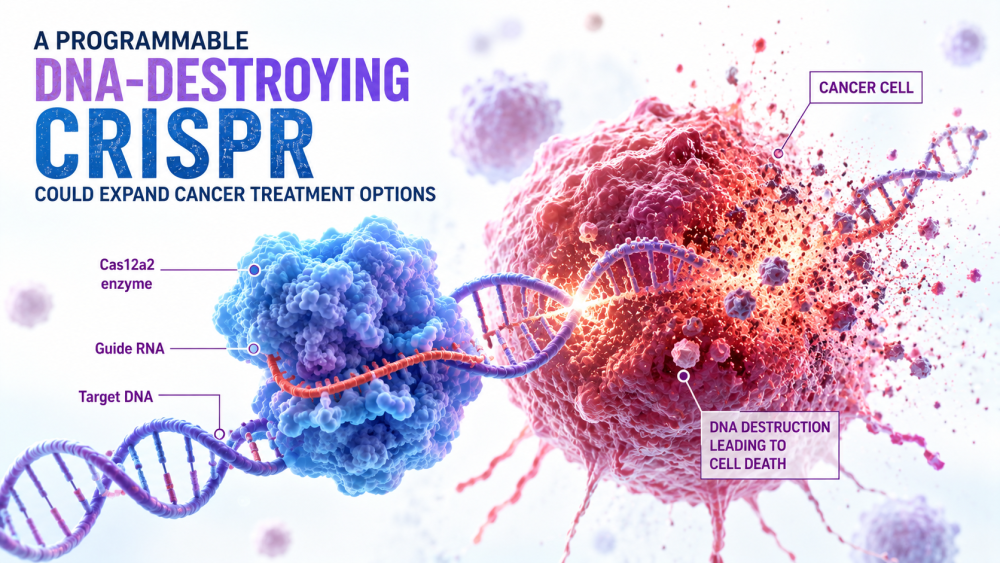
CRISPR is a molecular technology that enables scientists to target specific genetic sequences and modify DNA. In this case, the treatment is designed to reduce kallikrein production, an enzyme that generates bradykinin. By reducing kallikrein production, researchers aim to limit excessive bradykinin activity and prevent the chain of events that lead to swelling.
Unlike medicines that must be taken repeatedly to maintain their effects, this approach aims to make a lasting change in the body's biological machinery. The treatment is delivered via a single intravenous infusion, providing prolonged protection after one administration.
However, continued research must establish how long that protection lasts and the long-term safety of gene editing.
What did the clinical trial find?
The Phase 3 HAELO trial evaluated lonvo-z in 80 patients aged 16 years or older with hereditary angioedema due to C1 inhibitor deficiency.
Participants were randomly assigned to receive either a single 50-milligram infusion of lonvo-z or a placebo. Researchers compared the frequency of confirmed attacks from weeks 5 through 28 after treatment.
The results showed a substantial difference between the groups:
- Lonvo-z group: An average of 0.26 attacks per month.
- Placebo group: An average of 2.10 attacks per month.
- Overall result: An 87 percent reduction in the monthly attack rate compared with placebo.
The treatment group included 52 patients, 28 of whom received placebo. The median follow-up at the reported data cutoff was 7.5 months, though individual follow-up periods varied.
For patients who experience recurrent attacks, this reduction could mean fewer painful episodes and less disruption to everyday life. The results were statistically significant, strengthening the evidence that the treatment reduced attacks during the study period. An 87 percent reduction does not mean every patient became attack-free. Nor does the study establish that the benefits will last forever.
What about safety?
Safety matters especially for treatments that change genetic material.
During the first 28 weeks, adverse events were reported in 92 percent of participants who received lonvo-z and 86 percent of those who received placebo. The treatment group reported infusion-related reactions, headache, fatigue, back pain, and upper respiratory tract infections more frequently.
The study reported no serious adverse events and no Grade 3 or higher adverse events in the lonvo-z group during the assessment period.
These findings are encouraging, but the relatively small sample size and limited follow-up mean researchers cannot yet rule out uncommon complications or risks that may emerge years later. Longer-term monitoring will be essential to determine how durable the benefits are and whether additional safety concerns arise.
Why this research matters
This study's significance extends beyond hereditary angioedema. It demonstrates how gene-editing technology may offer a new approach to treating diseases by targeting the biological mechanisms that drive them.
Many conventional medicines control symptoms or temporarily block a disease pathway, requiring ongoing treatment. Gene-editing approaches aim to make longer-lasting changes in the body's biological processes.
That possibility raises important questions about long-term effectiveness, safety, affordability, and access. Researchers must also determine which patients are most likely to benefit and how the treatment compares with existing preventive medications.
For people with hereditary angioedema, however, the potential benefits are tangible: fewer attacks, less disruption, and possibly less dependence on ongoing preventive treatment.
A promising step, not yet a proven cure
The HAELO trial provides encouraging evidence that a single infusion of lonvo-z can substantially reduce hereditary angioedema attacks during the study period. It marks an important step toward developing gene-editing treatments for rare diseases.
Further research is needed to determine how long the benefits last, clarify long-term safety, and define the treatment's role in clinical practice. Regulatory approval and broader availability must also be established before patients can receive it routinely.
For now, the findings offer a glimpse of a future in which some people living with rare genetic diseases may have fewer attacks and greater freedom from the uncertainty that shapes their daily lives.
Disclaimer
The contents provided on www.biomedglobal.org are intended for general informational and educational purposes only. This website's information, articles, and resources are based on data and findings from scientific publications, publicly available research, and reputable sources.
While every effort is made to ensure accuracy and reliability, Biomed Global does not guarantee, endorse, or assume responsibility for the completeness, timeliness, or validity of the information.
The material on this website should not be considered a substitute for professional advice, diagnosis, or treatment. Users are strongly encouraged to consult qualified healthcare professionals, researchers, or subject-matter experts before making decisions based on the information presented here.
Under no circumstances shall Biomed Global, its affiliates, contributors, or authors be held liable for any direct, indirect, incidental, or consequential damages arising from the use of, or reliance on, the content of this website.
By accessing and using www.biomedglobal.org, you fully acknowledge and agree to this disclaimer.