The Science of Sweetness: How Rare Sugars Could Transform Global Health
Posted 6 months ago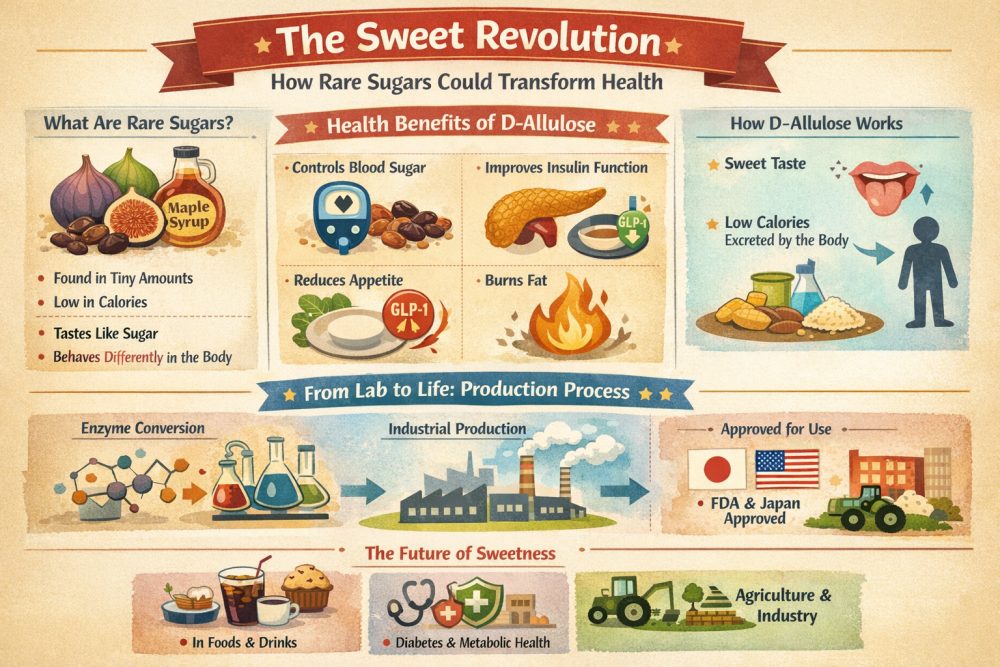
18/2026
🍬 Rare Sugars: The Sweet Revolution That Could Transform Health
In a world struggling with rising obesity, diabetes, and lifestyle-related diseases, a quiet scientific breakthrough is emerging from laboratories in Japan: rare sugars. These naturally occurring compounds may look and taste like ordinary sugar, but their effects on the human body could be significantly different.
An article published in Nature discusses the benefits of D-Allulose as a potential low-calorie sweetener.
🌍 The Global Sugar Problem: Why We Need a Change
Sugar is present everywhere in tea, desserts, packaged foods, and even “healthy” snacks. But this sweetness has a price.
- Almost half of adults worldwide are overweight or obese.
- Excess sugar consumption contributes to type 2 diabetes, heart disease, and metabolic problems.
- The main cause: consuming more calories than the body burns.
Traditional sugar (such as table sugar or sucrose) provides energy, but consuming too much can lead to fat buildup and blood sugar spikes.
👉 So the big question scientists are asking is:
Can we enjoy sweetness without harming our health?
🧪 What Are Rare Sugars?
Rare sugars are exactly what they sound like: naturally occurring sugars found in very small amounts (less than 1% of all sugars in nature).
One of the most promising among them is:
👉 D-allulose
It is found in tiny quantities in foods like:
- Figs
- Raisins
- Maple syrup
But here’s the fascinating part:
✔ It tastes like sugar
✔ But behaves very differently inside your body
⚙️ How D-Allulose Works (Simple Explanation)
D-allulose looks almost identical to fructose at the molecular level—but a tiny structural difference changes everything.
- Your tongue → senses sweetness ✔
- Your body cannot fully use it for energy.
Instead:
- It enters metabolic pathways
- But it does not generate significant calories.
- Most of it is expelled from the body.
👉 Result:
Sweet taste without the usual calorie load
🔬 Health Benefits: More Than Just Low Calories
Initially, scientists viewed D-allulose as simply a low-calorie sugar substitute. However, recent research indicates it might have many other benefits.
🩺 1. Helps Control Blood Sugar
- Lowers post-meal glucose spikes
- Competes with other sugars for absorption.
- Slows the entry of glucose into the bloodstream.
👉 Important for diabetes prevention and control
🧠 2. Improve Insulin Function
- May enhance insulin sensitivity.
- Protects pancreatic cells that produce insulin
👉 Could support long-term metabolic health
🍽️ 3. Controls Appetite
- Stimulates the release of the GLP-1 hormone in animal studies.
- This hormone reduces hunger and regulates eating
👉 People may naturally eat less
🔥 4. Promote Fat Burning
- Studies in animals indicate increased energy expenditure.
- May cause mild “fat-burning” responses in the body.
👉 Potential role in weight management
🏭 From Lab to Life: How Rare Sugars Are Made
For years, producing rare sugars was challenging. That changed thanks to Japanese scientists.
- Researchers created enzyme-based methods to transform common sugars into rare sugars.
- Now produced on an industrial scale
- Commercially sold in over 17 countries
👉 Approved by:
🍰 Can Rare Sugars Replace Regular Sugar?
Not completely, and that’s a key point. While rare sugars like D-allulose offer many benefits, they are not intended to replace regular sugar completely but to serve as healthier alternatives or supplements.
Experts suggest a smarter approach:
👉 Blending traditional sugar with rare sugars
Why?
- Maintains taste and texture
- Reduces harmful metabolic effects
- Make healthier diets more practical
As one researcher explains, sugar itself isn’t the problem; overconsumption is.
🚀 Future Possibilities: Beyond Food
Rare sugars may have applications far beyond sweetening:
- 🩺 Medicine (metabolic diseases, diabetes support)
- 🌾 Agriculture (crop protection chemicals)
- 🏗️ Industry (construction additives)
👉 This makes them a multi-sector innovation, not just a dietary trend.
🧾 Final Takeaway: A Sweet Future Without Guilt
Rare sugars like D-allulose are redefining what sweetness means.
✔ Same taste
✔ Fewer calories
✔ Potential health benefits
They won’t get rid of traditional sugar, but they might change the way we consume it.
💡 Bottom Line
The future of food isn't about eliminating pleasure; it’s about making pleasure healthier.
And rare sugars may be one of the most promising steps in that direction.
Disclaimer:
The contents provided on www.biomedglobal.org are intended for general informational and educational purposes only. This website's information, articles, and resources are based on data and findings from scientific publications, publicly available research, and reputable sources.
While every effort is made to ensure accuracy and reliability, Biomed Global does not guarantee, endorse, or assume responsibility for the completeness, timeliness, or validity of the information.