Too Little or Too Much Sleep May Accelerate Aging, Scientists Warn
Posted 4 months ago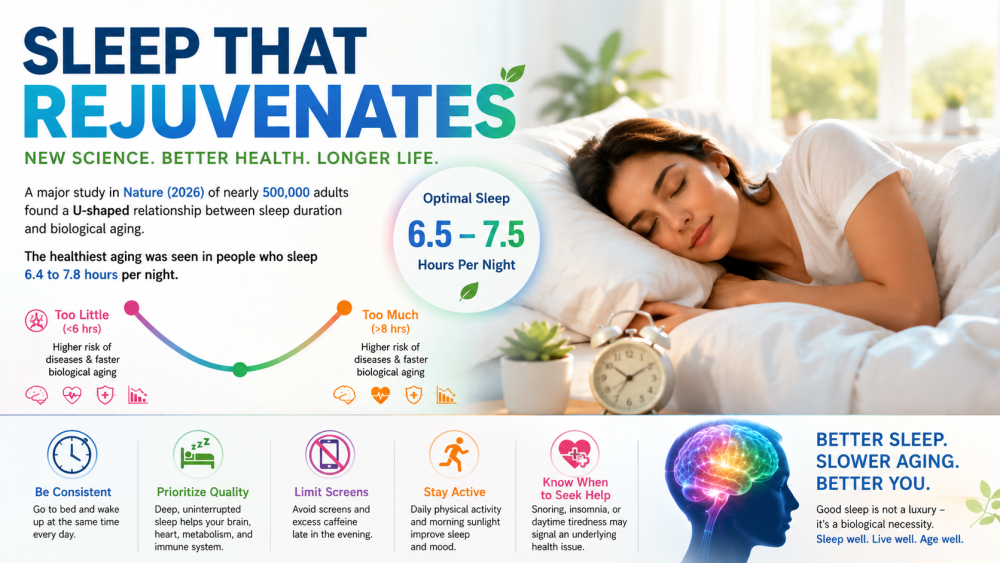
31/2026
A major new scientific study published in the journal Nature examined the sleep habits and health data of nearly half a million adults. Researchers found that both insufficient and excessive sleep may accelerate the body’s aging process. This effect was observed in several key organs, including the brain, heart, liver, kidneys, and even the immune system.
The study showed a “U-shaped” pattern, meaning that people at both extremes, those sleeping very little and those sleeping excessively, tended to have poorer health and signs of accelerated biological aging. In contrast, people who slept a moderate amount had healthier aging profiles.
According to the findings, the healthiest sleep duration was generally between 6.4 and 7.8 hours per night. This suggests that maintaining a balanced, regular sleep schedule may help protect the body’s organs, support mental and physical health, and slow age-related decline.
Based on scientific findings, the following sleep behaviors are strongly recommended:
- Aim for a consistent sleep duration of about 6.5–7.5 hours per night rather than assuming “more sleep is always better.”
- Avoid chronic short sleep (<6 hours). The study linked insufficient sleep to higher risks of depression, diabetes, cardiovascular disease, and accelerated biological aging.
- Avoid habitual long sleep (>8 hours) unless medically necessary. Excessively long sleep was also associated with increased disease burden, higher mortality risk, and accelerated aging markers.
- Maintain a regular sleep schedule. Sleeping at widely varying times disrupts circadian rhythms and may reduce the restorative effects of sleep, even if total hours appear adequate.
- Prioritize sleep quality, not just quantity. Deep, uninterrupted sleep supports brain repair, metabolic regulation, memory consolidation, immune function, and emotional stability.
- Reduce late-night screen exposure and excessive caffeine intake, especially in the evening, because both interfere with melatonin production and sleep architecture.
- Engage in daytime physical activity and morning sunlight exposure. Both help regulate the body clock and improve sleep efficiency.
- Seek medical evaluation if you regularly feel exhausted despite long sleep, snoring heavily, waking frequently, or struggling with insomnia, as underlying conditions such as sleep apnea, depression, metabolic disease, or anxiety may be contributing factors.
- Older adults and academic leaders should especially protect sleep routines. The study suggests that optimizing sleep may slow biological aging and improve long-term cognitive and decision-making performance.
The key scientific message from the study is that healthy sleep is not simply “more sleep.” Optimal sleep appears to act as a biological regulator for multiple organs and systems, influencing aging, mental health, metabolism, and longevity throughout the human body.